Why Guest Flow Is a Design Decision
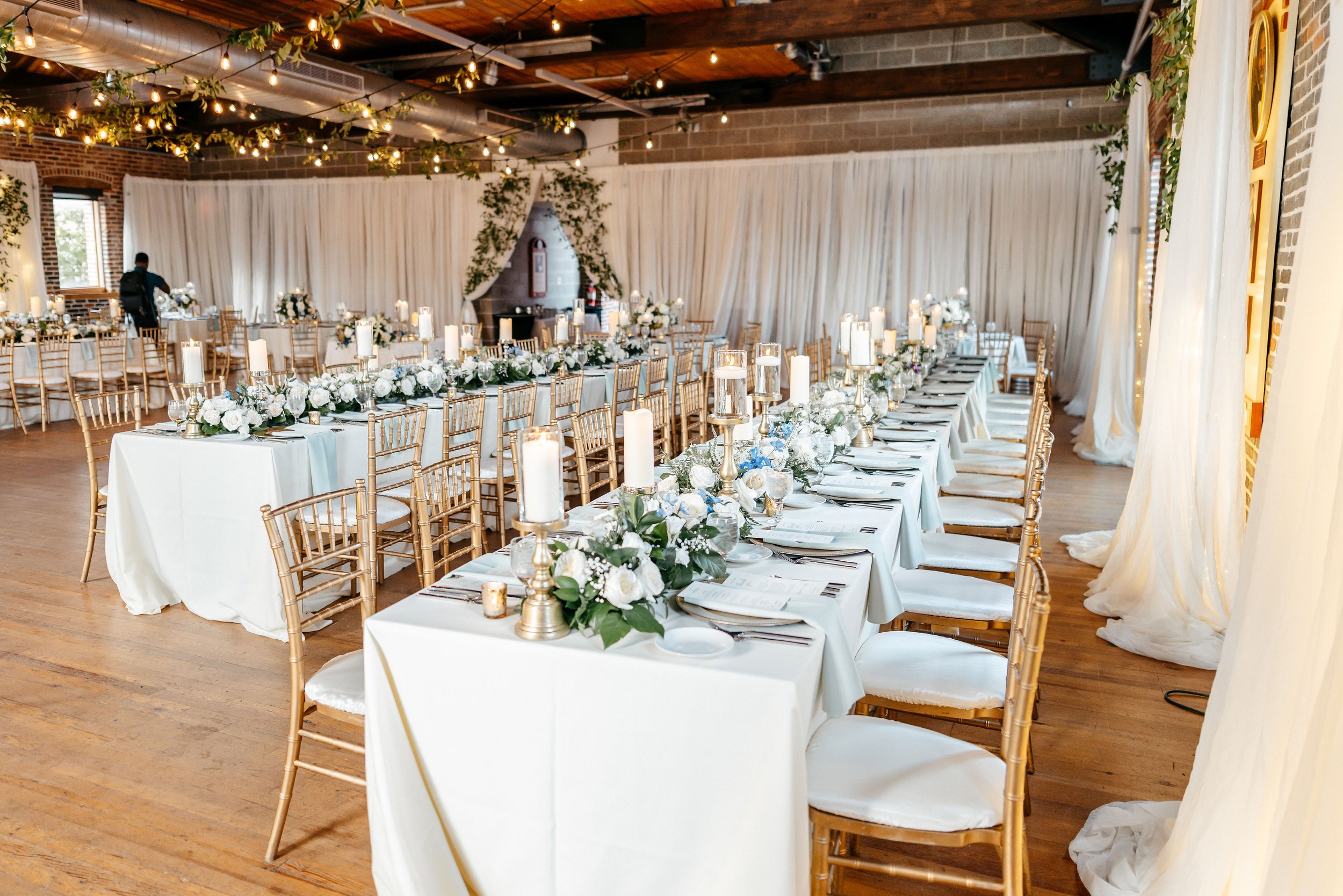
A beautifully designed room can still feel wrong if people don't know where to go. Guest flow event design is one of the least visible parts of our work and one of the most important.
Flow Starts Before the Guest List Does
Guest flow event design begins with the floor plan, before florals, draping, or furniture are placed. We look at how people will enter the space, where their eye goes first, and how they'll naturally move from one area to the next. A space designed without this in mind can look stunning in photos and still feel confusing to stand in.
Entry Points Set the Tone
The first few steps into a room shape a guest's expectations for the entire event. A cluttered or unclear entry point creates hesitation. A clear sightline toward a focal point, a backdrop, a stage, a bar, gives guests an immediate sense of where they are and what's ahead.
We treat the entry sequence as one of the most important parts of guest flow event design because it's the first impression of the entire environment, before a single detail of the decor is fully absorbed.
Zoning Without Barriers
Large events often require multiple zones: cocktail space, dining, a dance floor, a lounge area. The challenge is separating these zones without making the room feel divided or maze-like.
Draping, furniture placement, and lighting can all define a zone without a physical wall. A change in lighting temperature or a shift in furniture density signals a transition just as clearly as a barrier would, while keeping the space feeling open and connected.
Scale and Density
The proportion of furniture and installations to open space directly affects how a room moves. Too much density and guests feel crowded, even in a large venue. Too little and the space can feel empty or under-designed.
Guest flow event design accounts for expected guest count, service style, and how long people will spend in each area. A seated dinner requires different spatial planning than a standing reception, even within the same room.
Sightlines to Key Moments
Every event has a few key moments: a first dance, a toast, a keynote. Guest flow event design considers where guests will be standing or seated relative to these moments, and whether the layout supports clear sightlines without requiring guests to reposition themselves.
This is where floor plan and design decisions intersect directly. A stunning stage design loses its impact if half the room can't see it clearly.
Adapting to Difficult Venues
Not every venue offers an open floor plan. Columns, uneven room shapes, and fixed architectural features are common across the historic estates and unconventional venues we work in throughout Maryland, Virginia, and Washington, D.C. In these spaces, guest flow event design becomes even more important, using draping and furniture placement to soften awkward angles and guide movement naturally around fixed obstacles.
A column in the middle of a reception space can become a design opportunity rather than an obstacle when it's wrapped, lit, or incorporated into a backdrop. Working with a venue's constraints, instead of fighting them, is often what separates a smooth guest experience from a frustrating one.
Rentals and Furniture Placement
Furniture does more than fill a room. Placed with intention, it directs movement, defines seating areas, and creates natural pause points where guests can gather without blocking a walkway. Placed without a plan, it becomes one of the most common causes of a congested, uncomfortable layout.
We select and place rental furniture as part of the overall guest flow event design, considering not just how each piece looks but how it functions once the room is full of people rather than empty for a walkthrough.
Guest flow is rarely something guests consciously notice, and that's exactly the point. When it's done well, movement through the space feels effortless. When it's overlooked, even the most beautifully designed room can feel disjointed.
Explore our work to see how spatial planning shapes each of our designs, then schedule a consultation to start on yours.