Lighting Is a Design Decision, Not an Afterthought
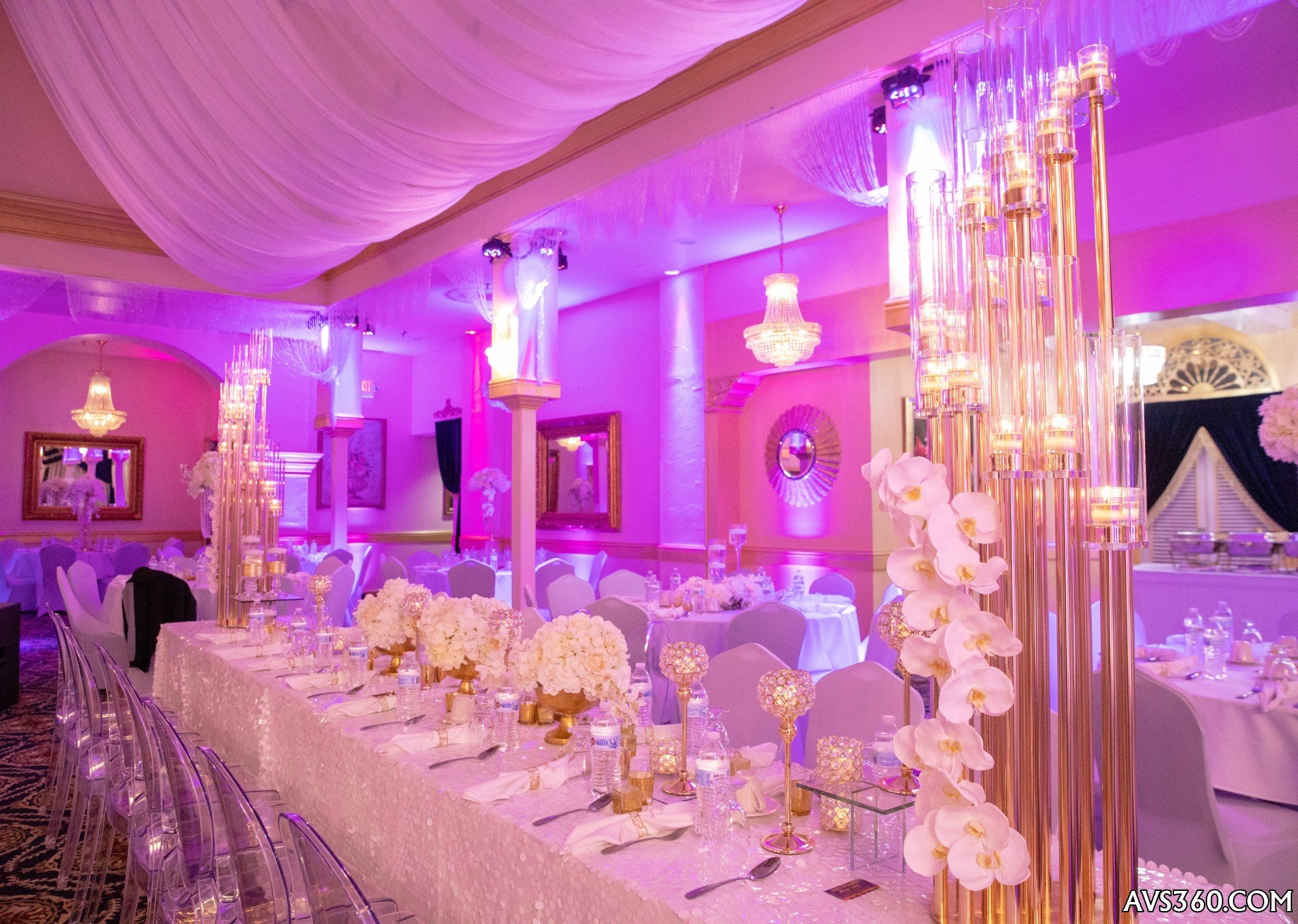
Lighting is often the last thing added to an event and the first thing that determines how everything else is perceived.
Effective event lighting design is not about brightness. It's about how light interacts with color, fabric, and architecture to shape the atmosphere of a room. When lighting is planned alongside the rest of the design, rather than layered on at the end, the entire environment reads as more considered.
Lighting Changes How Materials Read
Every material in a room, drape, linen, floral, furniture, responds differently to light. A neutral linen under warm lighting can shift toward gold. The same linen under cool white lighting can look flat or gray. This is why event lighting design has to be planned in conversation with material and color choices, not applied after those decisions are finalized.
We test lighting against the actual materials being used, in the actual space, whenever possible. A palette that looks balanced on a swatch board can shift entirely once the room's lighting plan is in place.
Ceiling Height and Light Placement
Ceiling height has a direct impact on how light is distributed across a room. Lower ceilings can make direct overhead lighting feel harsh, while higher ceilings often need additional layers of light to avoid feeling cavernous or empty.
Uplighting along walls and draping can extend the visual height of a room. Pin lighting on centerpieces or installations draws the eye to specific focal points. A strong event lighting design uses these layers deliberately, guiding the guest's attention through the space rather than lighting it evenly and calling it complete.
Warm Versus Cool Light Temperature
Light temperature is one of the more overlooked variables in event lighting design. Warm temperatures generally support a softer, more intimate atmosphere. Cooler temperatures can feel more modern and crisp, which works well for certain corporate or contemporary aesthetics but can feel sterile in the wrong setting.
Mixing temperatures within the same room, without intention, is one of the more common lighting mistakes we see. Consistency in temperature across a space keeps the environment feeling cohesive rather than fragmented.
Lighting and Guest Flow
Lighting also plays a functional role in how guests move through a space. Brighter areas naturally draw people in, while dimmer areas can be used to create separation between zones, like a lounge area versus a dance floor. Thoughtful event lighting design accounts for this movement, using light to support the flow of the event rather than leaving it to chance.
Timing Matters As Much As Placement
Many events shift in tone from a bright, open reception to a more intimate evening atmosphere. Lighting that adjusts throughout the night, dimming gradually, shifting in color temperature, supports that transition. A static lighting plan misses an opportunity to let the room evolve alongside the event itself.
Lighting Across DMV Venues
Venues across Maryland, Virginia, and Washington, D.C. vary in what natural and existing light they offer. A glass-walled venue in the city has very different lighting needs than a historic estate with limited natural light. Understanding a venue's existing conditions before building a lighting plan is one of the first steps in any event lighting design we take on.
A daytime event in a naturally bright space may only need lighting for accent and transition, while an evening event in a windowless ballroom needs a full plan built from the ground up. We assess each venue on its own terms rather than applying the same lighting formula across different spaces.
Lighting and Draping Work Together
Lighting rarely functions in isolation. The way light hits a draped wall or a fabric ceiling treatment changes the entire character of the installation. Backlighting a sheer panel creates depth and movement. Front lighting a heavier fabric emphasizes its folds and structure.
We design lighting and draping in tandem, not as separate line items. This is part of what allows the finished room to feel like one cohesive environment instead of a collection of individually beautiful elements.
Lighting shapes atmosphere more directly than almost any other design element in a room, and it's one of the most effective ways to elevate a space without adding more to it.
Start planning your event with a design team that treats lighting as part of the environment, not an add-on.