Why Fabric Selection Shapes the Entire Room
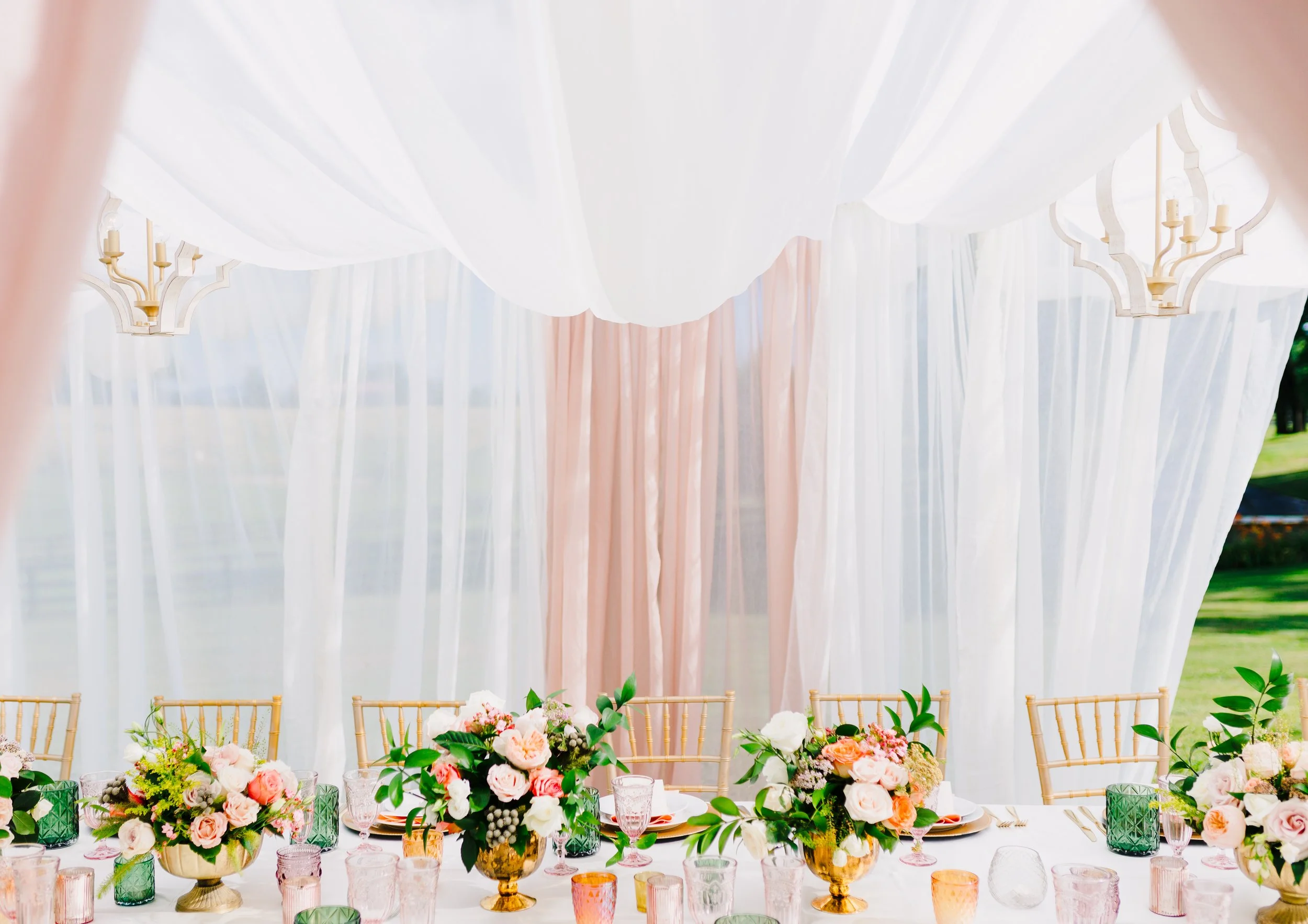
Draping is often described by color. We think about it by weight, drape, and texture first.
Event draping fabric selection determines far more than how a backdrop looks in photos. It affects how light moves through a room, how sound behaves, and how the space feels to stand in. Two drapes in the same color can create completely different environments depending on the fabric chosen.
Weight Determines Movement
Fabric weight is one of the first decisions in any event draping fabric selection. A heavier fabric, like velvet or velour, holds its shape and creates deep, defined folds. A lighter fabric, like chiffon or voile, moves with air and light, creating a softer, more transparent effect.
Neither is better. The right weight depends on the ceiling height, the room's air flow, and the effect the space calls for. A grand ballroom with high ceilings can support the drama of a heavier fabric. A more intimate space often needs something lighter so the draping doesn't overwhelm the room.
Texture Interacts With Light
Texture changes how a fabric reflects or absorbs light, which changes how the entire room feels after sunset. Matte fabrics absorb light and create a softer, more grounded atmosphere. Fabrics with sheen, like satin or silk-blend, reflect light and add brightness and movement, particularly under uplighting.
This is a detail we factor into every event draping fabric selection, especially for evening events where lighting and draping work together to shape the atmosphere. A matte fabric under warm uplighting reads very differently than a satin fabric under the same light source.
Fabric and Proportion
The scale of a room should inform the density of draping used, not just the color or texture. In a large space, sparse draping in a heavy fabric can look intentional and architectural. That same density in a small room can feel overwhelming.
We think about draping the way we think about any other structural element in the space: in proportion to the room, not as a decorative afterthought. This is part of why event draping fabric selection happens early in our design process, alongside the floor plan and rental layout, rather than at the end.
Durability and Function
Fabric selection is also a practical decision. Certain fabrics hold up better in high-traffic areas or near catering stations. Others are better suited for backdrops and photo areas where they won't be brushed against throughout the event.
Knowing which fabric performs well in which setting, and being able to explain that clearly to a client, is part of what separates a considered design plan from a purely aesthetic one.
A Layered Approach
Some of the most refined spaces we've designed use more than one fabric within the same palette. A sheer overlay against a heavier base fabric adds depth without adding visual noise. This layered approach to event draping fabric selection allows for dimension within a cohesive color story, rather than relying on multiple colors to create visual interest.
Selecting Fabric for DMV Venues
The climate and venue types across Maryland, Virginia, and Washington, D.C. play a role here too. Outdoor tented events in summer call for different fabric considerations than an indoor winter reception. Humidity, air conditioning, and even a venue's existing acoustics all factor into which fabric will perform, and look, the way it's meant to.
A historic estate with limited climate control calls for a different fabric than a modern hotel ballroom with consistent air flow. We walk each venue ahead of time so the event draping fabric selection accounts for the space as it actually functions, not just how it photographs.
Fabric as a Custom Element
Standard drape panels work well for many spaces, but some rooms call for something built specifically for them: a fabric ceiling treatment sized to an unusual span, a custom backdrop shaped around existing architecture, or a blended installation that combines two materials in a single structure.
Custom-designed fabric elements give us more control over how the room's proportion and texture come together. Rather than adapting a standard panel to fit a space, we build the piece to match the room's actual dimensions and the effect the event calls for.
Fabric selection is one of the more technical decisions in event design, and one of the easiest to underestimate. The right choice supports the room's proportion, lighting, and function all at once.
Request availability to talk through draping options for your venue.