How to Make a Large Event Feel More Personal and Intimate
Scale Is a Design Problem
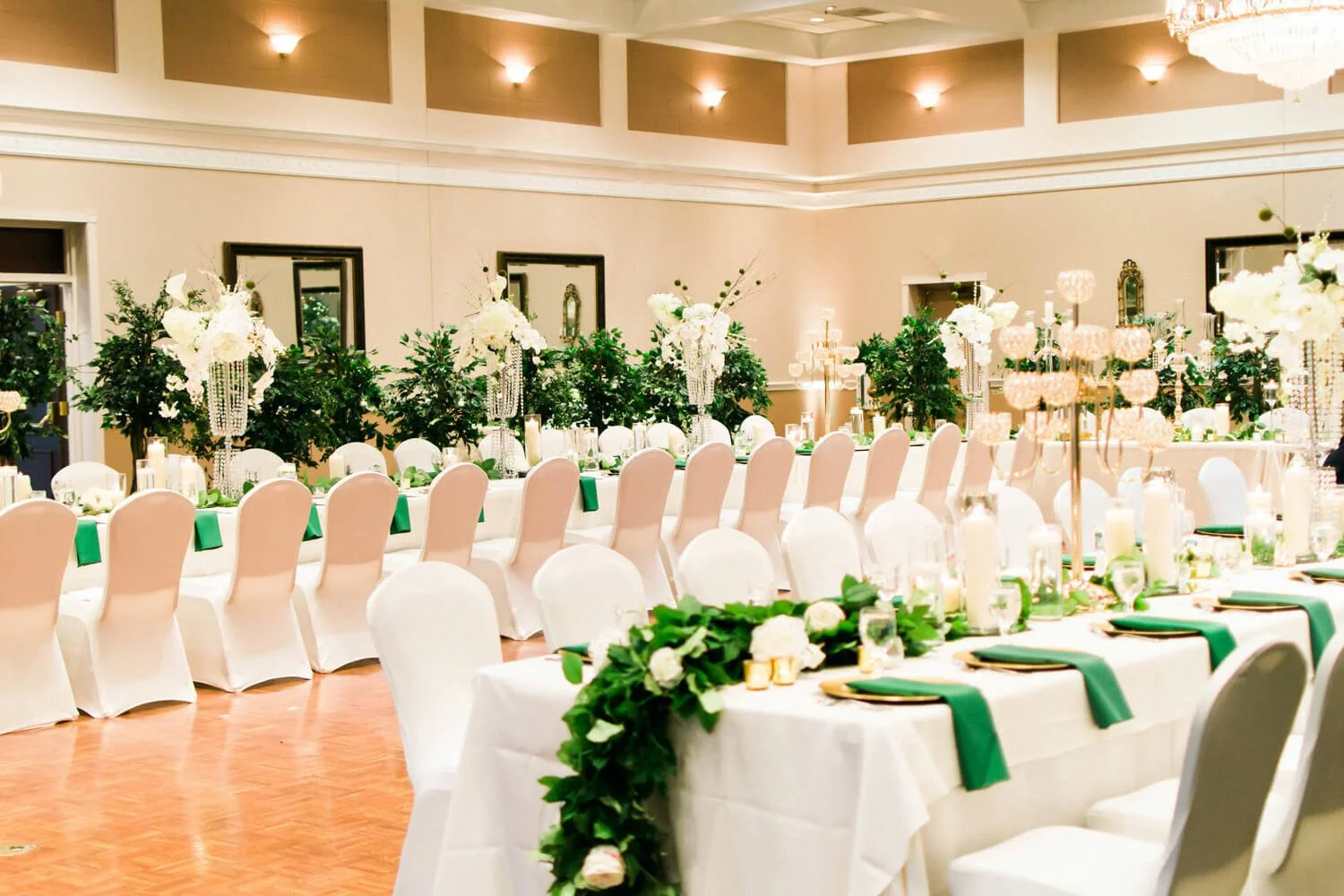
A large guest count does not have to produce a large-feeling event. But without deliberate design, it often does.
Open ballrooms, long rows of banquet tables, and unbroken sightlines across a room all communicate scale in a way that works against intimacy. Guests feel like they are in a large space rather than at an event designed for them. The experience becomes functional rather than felt.
Making a large event feel personal is one of the more common challenges we address for clients across Maryland, Virginia, and Washington D.C. It is also one of the most solvable.
Divide the Space Without Closing It Off
The first move in designing intimacy at scale is creating zones within the larger room. Not walls, not barriers, but defined areas that give guests a sense of being somewhere specific rather than somewhere large.
Draping is one of the most effective tools for this. A soft drape treatment that defines the perimeter of the dinner environment, separates a lounge area from the main floor, or frames a head table creates visual boundaries without physically closing the room. The space still feels open. But it feels organized and considered.
Furniture placement works alongside draping to reinforce these zones. A lounge grouping in a defined area of the room creates a secondary gathering point. Guests have options, and options make a large space feel more navigable and personal.
Lighting Creates Intimacy at Any Scale
Nothing contracts a large room more effectively than lighting. When the full room is evenly lit, the scale is on display. When lighting is layered and concentrated, guests focus on what is close to them rather than on the room as a whole.
For large events, this means designing lighting that emphasizes the table environment rather than the ceiling. Warmer, lower-intensity ambient sources. Candlelight or pin-spotting on table settings. Uplighting that adds depth to walls without washing the room in brightness. The result is a room that feels smaller than its dimensions because the design is drawing attention toward the guest rather than the space around them.
The Table Environment Matters More at Scale
In a large event, guests spend most of their time at their table. The table environment is where the experience of the event is actually felt. A well-proportioned centerpiece, appropriate linen texture, and considered place settings communicate that attention was paid to the specific seat a guest is sitting in, not just to the room as a whole.
Scale and proportion at the table level are where luxury event design shows up most clearly for individual guests. A centerpiece that is too small for a large table reads as an afterthought. One that is correctly proportioned, even if it is not elaborate, reads as intentional.
What Guests Feel in a Well-Designed Large Event
When a large event is designed well, guests do not leave thinking about how many people were there. They leave with the impression that the event was designed for them specifically, that the environment was considered, that it felt personal despite the scale.
That impression is not an accident. It is the result of design decisions made early: how the space is divided, how the lighting is layered, how the table environment is composed, and how draping and furniture work together to make a large room feel like a collection of smaller, more intentional moments.
Schedule a consultation to discuss your event and begin the design process.