How to Design an Event for Day-to-Night Transitions
The Transition Is Part of the Design
Some events ask a room to do two different things. An afternoon ceremony that becomes an evening reception. A corporate conference that closes into a formal gala. An outdoor cocktail hour that moves inside for dinner.
When the transition works, guests feel a shift in atmosphere without feeling disrupted. When it does not, the room never quite arrives at the evening environment it was supposed to become.
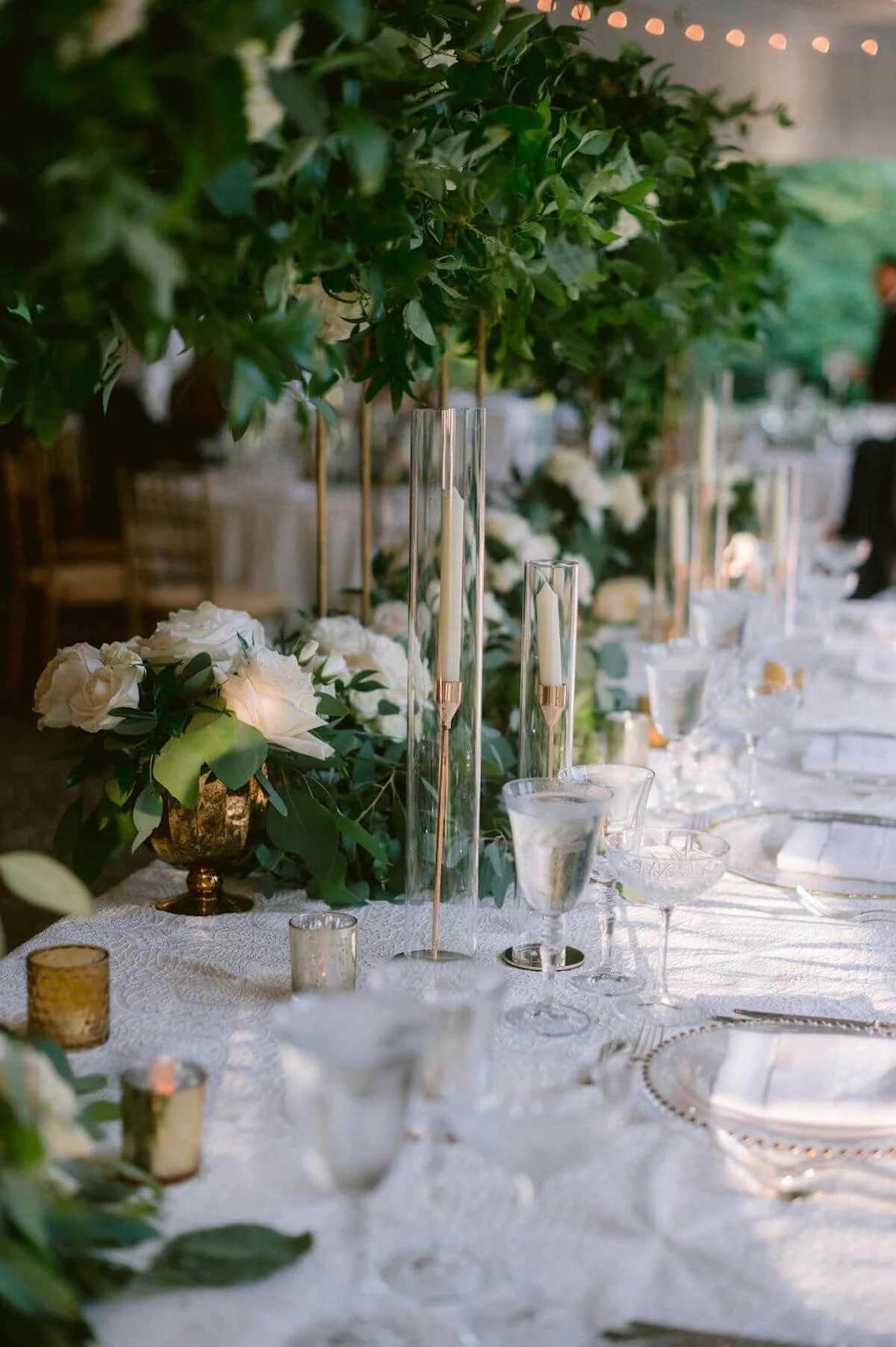
Designing for day-to-night transitions in the DMV region is something we plan for from the start, not something we adjust for at the end.
Lighting Does the Heavy Lifting
The single most effective tool for transitioning an event from day to night is lighting. Natural light defines the early atmosphere of any event. As it fades, the designed lighting environment takes over, and if it has not been planned carefully, the room can feel like it lost something rather than gained it.
The goal is a lighting plan that works in both conditions. During daylight hours, the room relies on natural light supplemented by warmer ambient sources. As the sun sets, uplighting, pin-spotting, and color washes shift the atmosphere without requiring anything to change physically in the room. Guests feel the transition without noticing the mechanism behind it.
For events moving from an outdoor cocktail hour to an indoor reception, this continuity of lighting language matters even more. The indoor environment should feel like a natural progression of the atmosphere guests just left, not a separate event in a different room.
Draping as an Atmosphere Tool
Draping contributes differently to a room at different times of day. In natural light, fabric texture and color are visible and detailed. As the room shifts to designed lighting, draping becomes a surface for that light. Uplighting against a white or ivory drape creates a glow that reads completely differently than the same drape in afternoon light.
For day-to-night event design, this means draping placement and material choice should account for both conditions. Sheer fabrics layer light beautifully in the evening. Heavier materials absorb it. The choice is not just about aesthetics in isolation. It is about how the material performs across the full arc of the event.
Designing the Shift in Guest Experience
The atmosphere of a cocktail hour and the atmosphere of a seated dinner should feel connected but distinct. Cocktail hour is typically lighter in energy. The room is in motion. Guests are standing, moving, discovering the space. Dinner asks the room to settle.
This shift can be supported through design. Lounge furniture in the cocktail space gives way to a composed table environment at dinner. Ambient lighting warms and dims. A drape or floral treatment at the entry to the dinner room signals that something different is beginning.
When these transitions are designed deliberately, guests move through the event feeling guided rather than redirected.
Planning for It from the Start
The mistake most common in day-to-night event design is treating the transition as an operational detail rather than a design consideration. Lighting rigs, dimmer controls, and layered sources all need to be planned in advance. A room that was not designed with the transition in mind rarely achieves it gracefully after the fact.
If your event moves across different atmospheres or time periods, that arc is part of what we design for from the first conversation.
Request availability to discuss your event lighting and design.