Designing a Backdrop That Works as More Than a Photo Spot
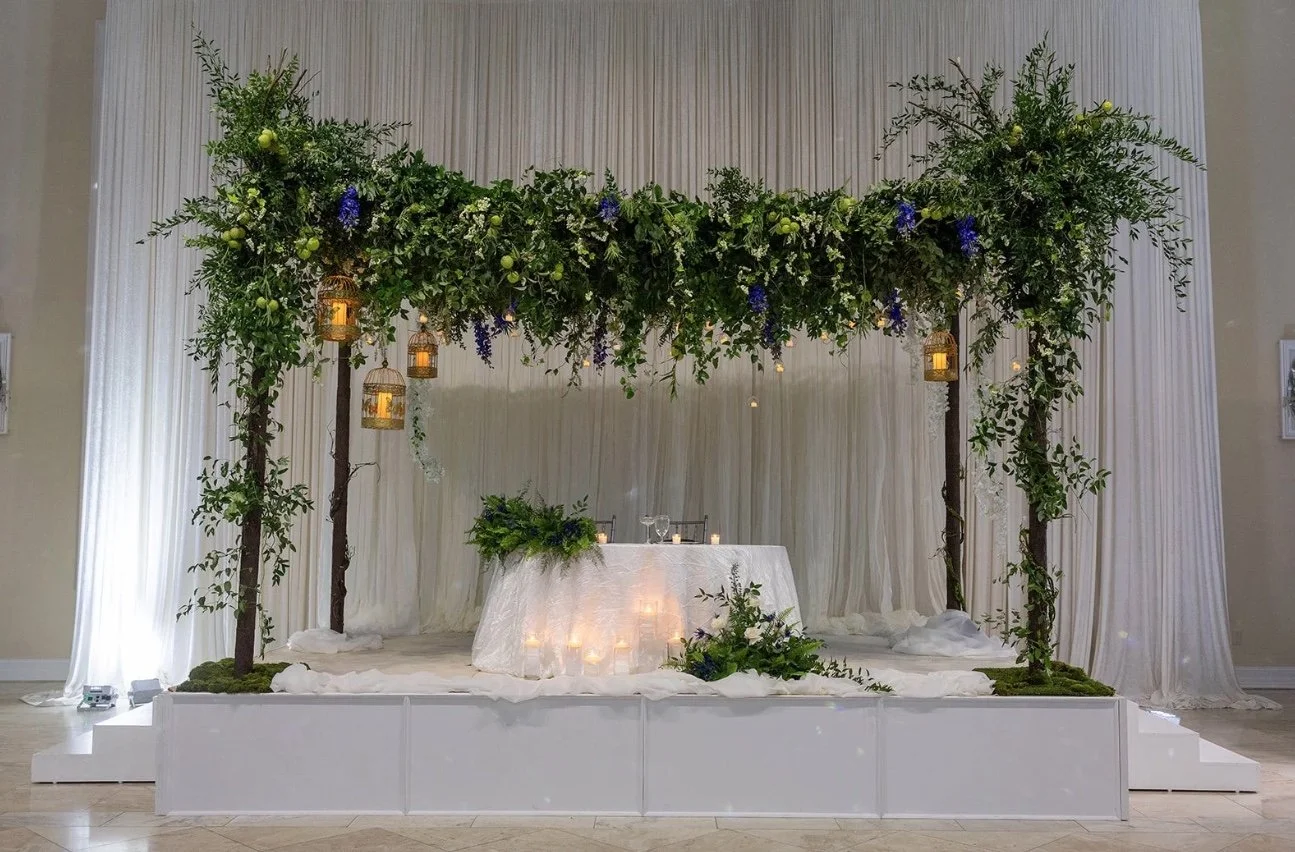
A backdrop is often the most photographed element of an event, and one of the most underdesigned. Event backdrop design deserves the same level of consideration as the rest of the room, not a last-minute addition placed once everything else is finished.
A Backdrop Is a Focal Point First
Before it becomes a photo location, a backdrop functions as a visual anchor for the room. Guests' eyes are drawn to it from across the space, whether or not they ever stand in front of it for a photo. Event backdrop design has to account for how the piece reads from a distance, not only up close.
This means proportion matters more than intricacy. A backdrop with too much fine detail can look busy or unclear from across a ballroom, even if each individual element is well made.
Matching the Backdrop to the Room's Palette
A backdrop that doesn't relate to the rest of the room's color and material choices tends to feel like a separate installation rather than part of the environment. Event backdrop design works best when the fabric, florals, and structure echo decisions already made elsewhere in the space.
This is one of the reasons backdrop design should be planned alongside the color palette and draping plan, rather than sourced independently once the rest of the room is set.
Function Beyond Photos
A well-designed backdrop can double as a functional structure: a stage backdrop that supports a speaking moment, a ceremony backdrop that frames an officiant and couple, a lounge backdrop that defines a seating area. Event backdrop design considers this dual function from the outset, rather than treating the piece as purely decorative.
A backdrop built only for photos often looks unfinished from the side or back. One designed with its full function in mind holds up from every angle guests will actually see it from.
Lighting the Backdrop Correctly
A backdrop lit only from the front can look flat in photos. Backlighting adds depth and separates the structure from the wall behind it. Uplighting at the base can highlight texture in the fabric or floral work. Event backdrop design and lighting design need to be planned together so the piece photographs the way it was intended to look in person.
Scale for the Space
A backdrop sized for a small lounge area will read as undersized on a large ballroom stage. One built for a grand stage can overwhelm an intimate gathering space. Event backdrop design starts with the room's dimensions and the number of guests who will be viewing it, whether in a modern hotel ballroom or a historic estate across Maryland, Virginia, or Washington, D.C.
Structural Considerations
A backdrop needs to hold its shape and position for the full duration of an event, often while guests lean against it, brush past it, or stand in front of it for extended photo sessions. The frame and rigging behind a backdrop matter as much as the fabric or florals visible on its face.
Event backdrop design accounts for this from the start, choosing a structure suited to the venue's ceiling height, floor type, and expected foot traffic, rather than treating the framework as an afterthought to the visible design.
Placement Within the Room
Where a backdrop sits within a room affects both its impact and its function. Placed directly opposite the entrance, it becomes the first thing guests see. Positioned behind a head table or stage, it frames the evening's key moments. Event backdrop design considers sightlines from every seat in the room, not only from the vantage point of a photographer.
It also has to account for traffic flow around it. A backdrop placed too close to a walkway can create a bottleneck as guests stop for photos, while one positioned with enough surrounding space keeps the rest of the room moving comfortably.
A backdrop carries more visual weight than almost any other single element in a room. Designed with intention, it becomes a defining feature of the event, not just a place to stand for a photo.
Begin the design process to build a backdrop that works for your space and your event.