Furniture Is a Design Decision, Not a Checklist Item
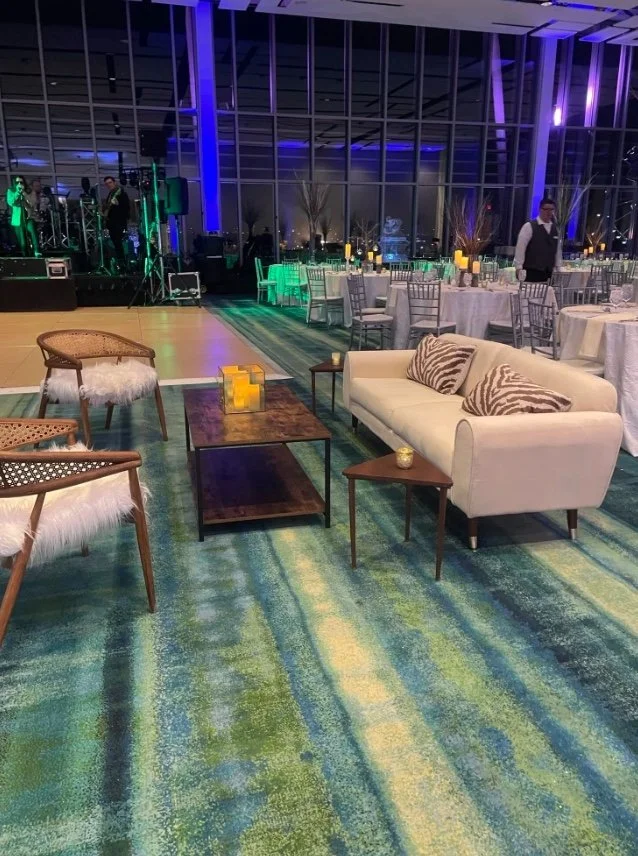
Furniture is easy to treat as logistics: enough seats for the guest count, a few cocktail tables, done. Event furniture rental design, approached with intention, does far more than fill a room's functional needs.
Furniture Sets Scale Before Anything Else Is Placed
Long before florals or draping go in, furniture establishes the scale of a room. Oversized lounge pieces in a small space feel overwhelming. Delicate, low-profile furniture in a grand ballroom can disappear entirely. Event furniture rental design starts with matching furniture scale to the room, not to a catalog of favorite pieces.
Silhouette Signals Tone
A clean-lined, low-profile silhouette reads as modern and refined. Curved, upholstered pieces feel warmer and more traditional. Mixing too many silhouettes without a clear logic makes a room feel unplanned, even when each individual piece is beautiful on its own.
We choose furniture silhouettes the way we choose fabric and color: with a consistent logic across the room, so each piece supports the same overall environment rather than competing with it.
Furniture and Guest Flow
Furniture placement directly shapes how guests move through a space. Seating arranged in clusters invites conversation and creates natural pause points. Furniture placed without a plan often ends up blocking sightlines or crowding walkways.
Event furniture rental design accounts for expected guest count and movement patterns from the start, not as a last-minute adjustment once the floor plan is already set.
Material and Texture in Furniture
The same principles that apply to draping fabric apply to furniture upholstery. Velvet reads differently than linen. A matte wood finish reads differently than a lacquered one. These material choices affect how furniture interacts with lighting and with the rest of the room's palette.
We treat furniture material as part of the room's overall composition, coordinating it with drape fabric and floral texture rather than sourcing it in isolation.
Curated Versus Standard Rentals
Standard rental packages work well for many events, but some rooms call for a more curated approach: mixed vintage pieces, custom upholstery, or furniture sourced specifically for a room's proportions. Event furniture rental design considers when a standard package will serve the space well and when a more custom approach is worth the investment.
This is a decision we make early, alongside the floor plan and the rest of the design, across the range of venues we work with throughout Maryland, Virginia, and Washington, D.C.
Furniture Density and Breathing Room
The amount of open floor space left around furniture groupings affects how a room feels as much as the furniture itself. Too tightly packed, and even beautifully chosen pieces feel like clutter. Too sparse, and the room can feel unfinished, especially once guests arrive and the space needs to accommodate movement.
Event furniture rental design treats negative space as intentionally as it treats the furniture itself, since the gaps between pieces are what allow a room to feel composed rather than crowded.
Layering Furniture Across Zones
Different areas of an event often call for different furniture approaches. A cocktail hour benefits from higher tables and more standing-height pieces that support mingling. A lounge area calls for lower, softer seating that encourages guests to settle in. Event furniture rental design shifts its approach zone by zone, rather than applying one furniture style uniformly across the entire event.
Even within a single zone, mixing seat heights and forms, a low sofa paired with a taller accent chair, for example, adds visual interest without breaking the overall consistency of the room, provided the material and color story stays connected across every piece.
Furniture is one of the most functional elements in a room and one of the clearest signals of design intent. Treated as an afterthought, it fills space. Treated as part of the overall composition, it elevates it.
Explore our work to see how furniture curation shapes each of our designs.