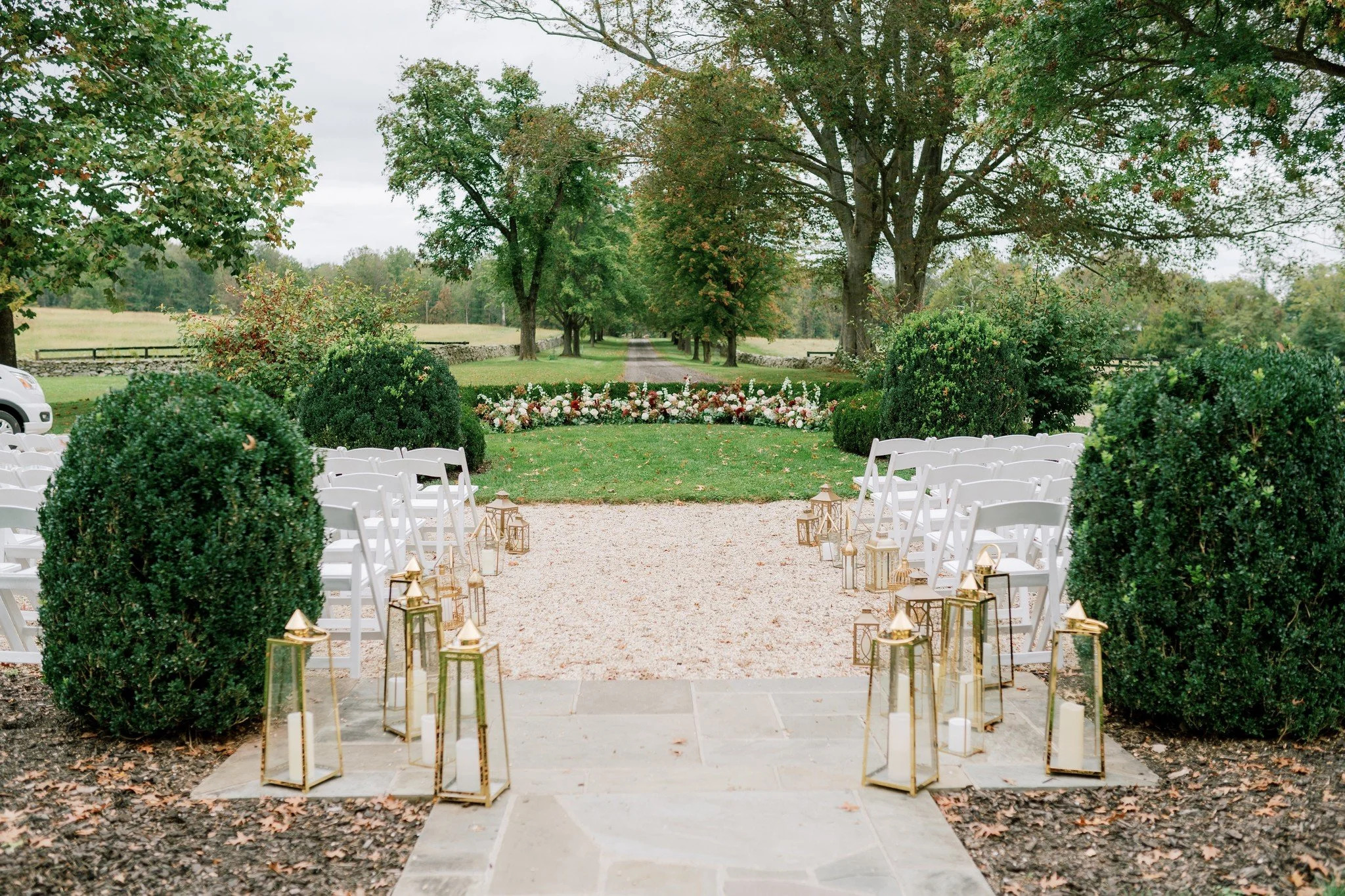
By September, the light in Maryland, Virginia, and Washington, D.C. has already started to shift. Sunset moves earlier by the week, and a reception that once had two hours of natural light now has closer to forty-five minutes. Fall event lighting design has to account for that change directly, because a lighting plan built for summer timing will leave guests standing in the dark before dinner is served.
What Actually Changes in the Fall
The obvious shift is timing, but the less obvious one is color temperature. Late afternoon fall light tends to run warmer and lower in the sky, which changes how florals, linens, and draping read compared to the same setup at midday in June. A lighting plan that ignores this seasonal shift often ends up correcting for problems that could have been designed around from the start, adding fixtures reactively instead of accounting for the change from the first walkthrough.
Layering Light Instead of Adding More of It
The instinct when days get shorter is to simply add more fixtures. A more considered fall event lighting design layers different light sources instead, uplighting for architecture, pin spots for tablescapes, ambient wash for the overall room tone, so that as natural light fades, the room transitions rather than suddenly switching on. Each layer does a specific job, and no single source is asked to carry the whole space.
Designing Around the Golden Hour Window
Fall's brief golden hour is one of the most photographed windows of any event, which means it deserves a deliberate plan rather than luck. We map the sunset time for the specific date and venue well in advance, then schedule key moments, first look, cocktail hour, toasts, around that window when it makes sense for the couple or host. Lighting design supports that moment rather than competing with it, keeping installed light low and warm until natural light is fully gone.
Lighting the Transition Between Spaces
Fall events frequently move guests between outdoor and indoor spaces as temperatures drop through the evening. That shift needs lighting continuity, matching color temperature and brightness levels between a tented space, a breezeway, and an indoor room, so guests do not feel like they have walked into a different event. This is where fall event lighting design connects directly to the overall atmosphere and flow of the evening, not just the visual details within one room.
Planning for Shorter Days From the Start
The biggest mistake we see is a lighting plan added late, after florals, draping, and layout are already finalized. In fall, lighting has to be part of the earliest design conversations, because the compressed daylight window changes decisions about seating direction, where installations are placed, and how early certain elements need to be lit for guests to actually see them. Building lighting into the design from the beginning avoids expensive last-minute adjustments once the shorter days are already a factor.
Lighting for Photography After Dark
A shorter daylight window also means more of the evening happens under installed light, which changes what a photographer has to work with. Flat, overly bright lighting photographs poorly regardless of how well a room is designed, while light that is layered with intention gives dimension to florals, draping, and architecture even in low-light conditions. We coordinate lighting design with the photography timeline directly, confirming which moments will happen after natural light is gone and making sure the lighting plan supports those shots rather than working against them.
The Point of a Fall Lighting Plan
Fall event lighting design is less about adding drama and more about accounting for a season that behaves differently than the rest of the year. Done early and layered thoughtfully, it lets the room read exactly as intended, regardless of what time the sun goes down, and it keeps the evening feeling composed rather than reactive to whatever daylight happens to be left.
Have a fall event on the calendar? Schedule a consultation to start planning your lighting design.