How to Design a High-Impact Event Stage (Without Overbuilding the Space)
The Stage Is a Frame, Not a Feature
When we begin planning a stage for a corporate event, gala, or awards ceremony in the DMV region, the first question is not what to put on it. It is what we want the audience to feel when they look at it.
A well-designed stage anchors the room. It gives the space scale and draws the eye without overwhelming everything around it. That distinction is where most event stage designs fall short.
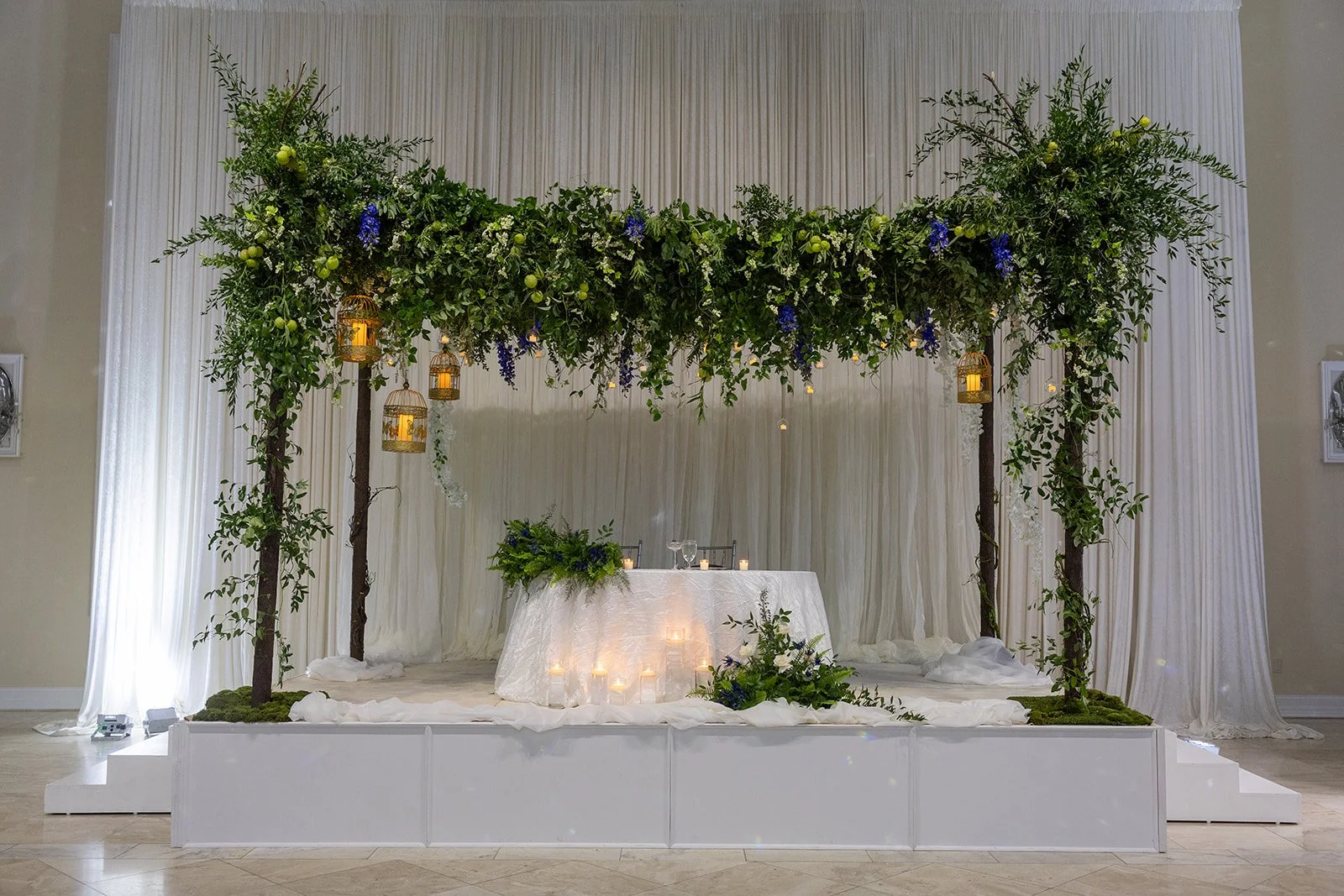
Why More Is Rarely the Answer
The instinct is to fill every inch: more draping, more lighting, more layers. The result is usually a stage that feels heavy and disconnected from the room.
What experienced event designers in Maryland, Virginia, and Washington D.C. understand is that proportion matters more than volume. A backdrop that is slightly undersized for the ceiling height will feel flat. One that extends too wide will make the stage feel cramped. The goal is a composition where every element has a clear spatial relationship to the architecture around it.
What Actually Creates Impact
Impact on a stage comes from three things: scale, contrast, and light.
Scale means the backdrop height and width relate correctly to the stage and the room beyond it. Contrast means the stage reads differently from the surrounding environment, where material, color temperature, and layering choices create depth. Light is the most underused tool in event stage design. Uplighting, gobo projection, and pin-spotting all shape how materials read in a room. A backdrop that looks flat under house lighting can feel architectural once it is lit correctly.
Custom Backdrops vs. Standard Options
Standard pipe-and-drape setups define a space, but they are designed to be universal, which means they are not designed for any specific room. Custom stage backdrop design starts from the room: ceiling height, seating distance, ambient lighting, and the overall color story of the event.
For events across Washington D.C., Maryland, and Virginia, where venues range from from historic ballrooms to modern conference centers. That specificity makes a significant difference in the result.
When to Pull Back
Not every event needs a full stage build. A clean drape in the right proportion, correctly lit, will outperform an overbuilt backdrop in almost every case. Knowing when to simplify is part of the design process. The goal is always a stage that feels intentional, not one that signals how much was spent on it.
If you are planning an event in the Maryland, Virginia, or D.C. area, the stage environment is worth designing from the start. Schedule a consultation to begin the process.