How to Design Around Challenging Venues (Low Ceilings, Dark Rooms, Awkward Layouts)
The Room Is Part of the Design
Not every venue is a designer's ideal starting point. Some rooms have low ceilings. Some have dark walls that absorb light and flatten the space. Some have columns in inconvenient locations or layouts that complicate guest flow.
These are not problems to solve around. They are conditions to design with. After working in venues across Maryland, Virginia, and Washington D.C., we have found that the room's limitations rarely determine the outcome. How deliberately you design around them does.
Designing for Low Ceilings
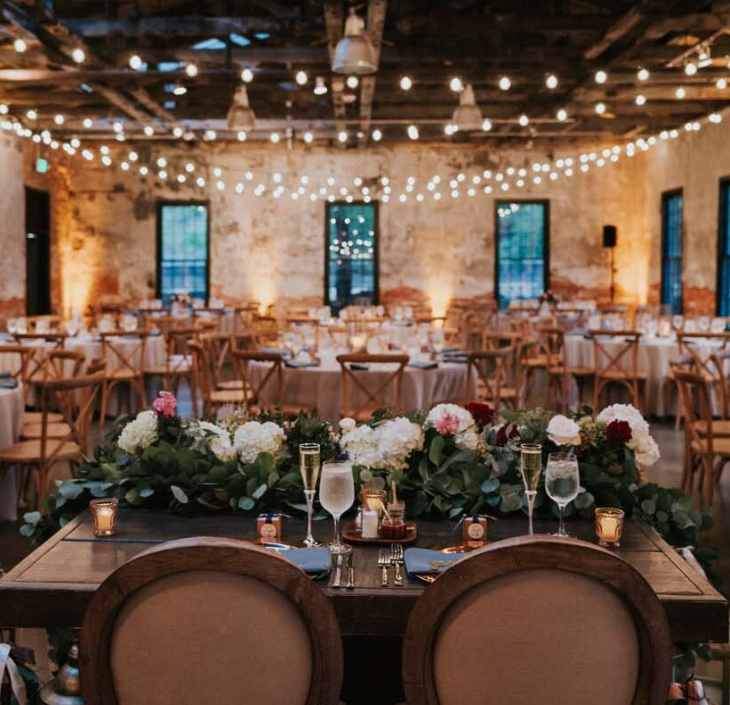
Low ceilings require restraint in scale and precision in material choices. Rather than minimizing everything, the more effective approach is to create controlled vertical moments in specific areas (a statement drape above the head table, a floral installation at the entrance) that create the perception of height while the broader design stays proportionate to the actual ceiling.
Lighting temperature also matters significantly. Warmer, lower-intensity lighting reduces the visual weight of the ceiling and makes the room feel intimate rather than compressed.
Designing for Dark or Visually Flat Rooms
Dark rooms require contrast to create depth. White or ivory draping against a dark wall creates immediate separation and visual layering. Light-colored linens, metallic vessels, and strategic uplighting pull the room forward and prevent it from feeling flat.
The challenge is calibrating how much contrast to introduce. Too little and the design disappears. Too much and it feels disconnected from the architecture. The goal is a design that enhances the room's character rather than fighting it.
Designing Around Awkward Layouts
Columns, multiple levels, and irregular footprints require rethinking how guests move through the space. A column treated intentionally, with draping, florals, or lighting, becomes part of the design rather than an interruption of it. Irregular room shapes often benefit from zoning: using furniture, draping, or lighting to define distinct areas without fragmenting the room.
What Experienced Designers Do Differently
The most important event design tip for difficult venues is straightforward: visit the room before making any design decisions. Floor plans do not capture ceiling height, natural light, or atmosphere.
We visit every venue we design for and look at it with specific questions in mind: where light falls, how the room reads from the entry point, what architectural elements can be incorporated rather than worked around. That site-specific knowledge is what separates a design that uses the room from one that simply apologizes for it.
If your venue presents design challenges, request availability to discuss your event.