How to Design a Luxury Event Around a Venue's Existing Architecture
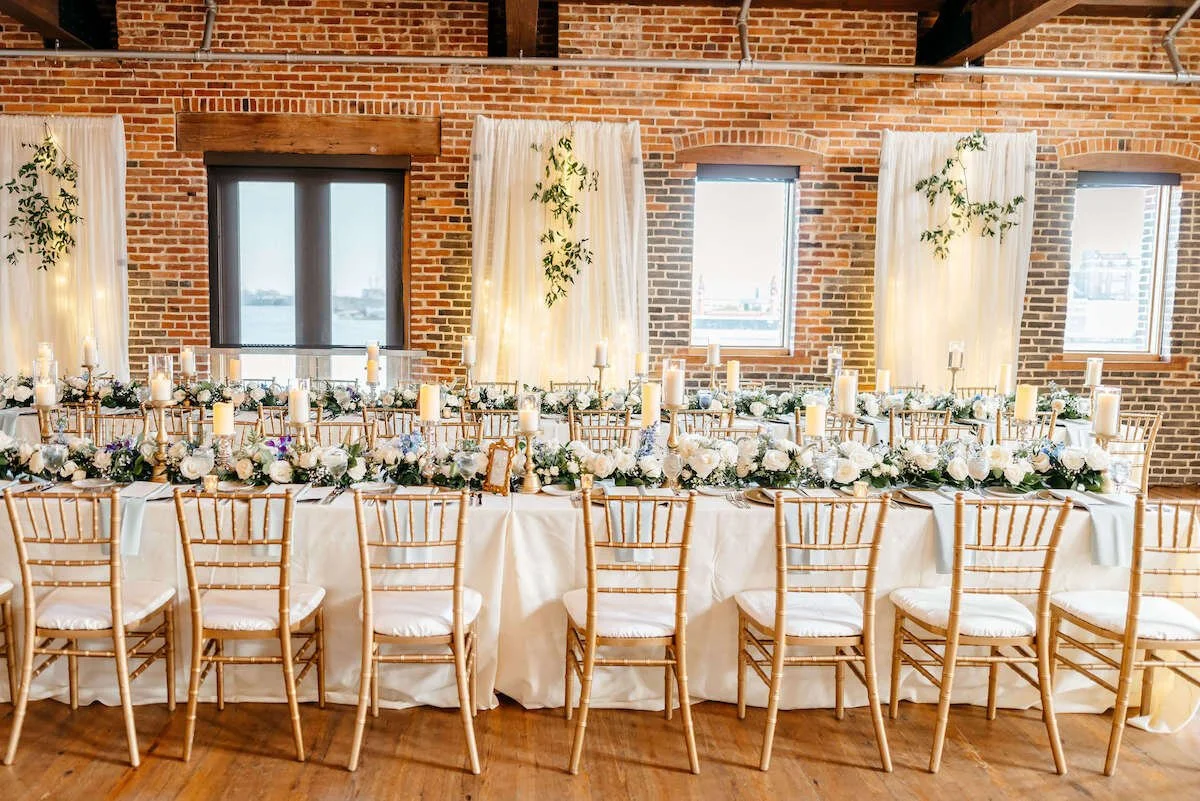
The Venue Comes First
Most clients book their venue before they hire a designer. By the time we are brought in, the room is already decided. The exposed brick is staying. The coffered ceiling is staying. The terrazzo floors and the arched windows are part of the environment whether we work with them or not.
This is not a limitation. It is the starting point.
Experienced event designers in Maryland, Virginia, and Washington D.C. know that the architecture of a space is one of the most powerful design tools available. The question is never how to cover it. It is how to use it.
Reading the Room Before Designing It
Before we select a single element for an event, we look at the venue itself. What does the architecture communicate? A historic ballroom in Georgetown speaks differently than an industrial loft in Baltimore or a modern conference space in Tysons. The design should feel like it belongs in that room, not like it was placed in front of it.
Exposed brick calls for warmth. Rich textiles, candlelight, and organic florals will feel at home in that environment. Clean architectural lines and muted palettes will fight it. A glass and steel space, on the other hand, invites contrast: a soft drape installation or a lush floral moment reads beautifully against a modern backdrop precisely because it is unexpected.
Hotel ballrooms present a different challenge. They are often neutral by design, built to accommodate any event. Here, the architecture does not dictate the mood as strongly, which means the design carries more responsibility. Draping, lighting, and furniture choices shape the entire atmosphere.
Working With Architectural Details
Columns, beams, and arched entries are frequently treated as obstacles. In a well-considered event design, they become anchors.
A colonnade treated with consistent draping or floral installations creates a rhythm that guides guests through the space. A vaulted ceiling becomes an opportunity for a hanging installation that would be impossible in a standard room. An arched entry frames the arrival moment in a way no temporary structure can replicate.
The key is consistency. An architectural detail that is treated in one area and ignored elsewhere reads as an afterthought. When it is incorporated into the full design logic of the room, it elevates the entire environment.
Lighting Is the Bridge
The element that connects event design to existing architecture most effectively is lighting. The right lighting temperature can warm a cold modern space, add drama to an already ornate room, or bring an industrial venue into a completely different atmosphere.
Uplighting along brick or stone walls creates depth. Pin-spotting on florals or table settings draws the eye through the room. Gobo projection on a neutral wall introduces pattern and texture without competing with the architecture around it.
For event design ideas in Maryland and across the DMV region, lighting is often where the transformation happens. It is the layer that makes everything else read correctly in the space.
The Designer's Role
Working with existing architecture requires a different skill set than designing in a blank box. It requires understanding how materials, light, and proportion interact with a room that already has a point of view.
That is what separates event design from event decor. A decorator fills a room. A designer responds to it.
If you have already booked your venue and want to understand how to build a design around it, schedule a consultation to begin the process.